当前位置:我的网站主页 > 我的网站国内 > 我的网站内容

柳叶刀

China-Tanzania healthcare cooperation brings AI-powered diagnosis to patients_我的网站

七宗罪

A |     DETROIT -- The United Auto Workers union significantly escalated its walkout against Detroit's Three automakers, shutting down Ford's largest factory and threatening Jeep maker Stellantis.In a surprise move Wednesday night, 8,700 members left their jobs at Ford’s Kentucky truck plant in Louisville.And Thursday morning, union President Shawn Fain hinted at further action against Stellantis. “Here's to hoping talks at Stellantis today are more productive than Ford yesterday,” Fain wrote on X, formerly Twitter, without saying what might happen.Ford's truck plant makes heavy-duty F-Series pickup trucks and large Ford and Lincoln SUVs, hitting the company's most lucrative products. The vehicles made at the plant generate $25 billion per year in revenue, the company said in a statement.Fain said in a statement that the union has waited long enough “but Ford hasn’t gotten the message” to bargain for a fair contract. “If they can’t understand that after four weeks, the 8,700 workers shutting down this extremely profitable plant will help them understand it,” Fain said.The strike came nearly four weeks after the union began its walkouts against General Motors, Ford and Stellantis on Sept. 15, with one assembly plant from each company. The company, however, called the strike expansion “grossly irresponsible” and said it has made strong wage and benefit offers to the union. It said the move puts about a dozen other Ford facilities at risk, as well as parts supply plants that together employ over 100,000 people.A Ford executive said the union called a meeting at the company's Dearborn, Michigan, headquarters Wednesday afternoon where Fain asked if the company had another offer. High-ranking Ford executives responded that they are working on possibly bringing electric vehicle battery plants into the UAW national contract, essentially making them unionized. But they didn't have a significantly different economic offer, the executive said. Fain was told the company put a strong offer on the table, but there wasn't a lot of room to increase it and keep it affordable for the business, the executive said.Fain responded by saying, if that's the company's best offer, “You just lost Kentucky Truck Plant,” said the executive. The meeting only lasted about 15 minutes, he said. In a video, Fain said the union moved because Ford didn't change its offer. “We've been very patient working with the company on this,” he said. “They have not met expectations, they're not even coming to the table on it.”The escalation against Ford shows that Fain is trying to increase pressure on the company, said Marick Masters, a business professor at Wayne State University who follows labor issues.But Ford and the other automakers have made concessions and raised wage offers, he said. The companies, he said, “may have reached their resistance points to varying degrees.” Executives, he said, have bottom line positions they can’t cross in terms of staying competitive with other automakers.Fain, Masters said, likely is testing how far he needs to push Ford before going to “full throttle,” by taking all 57,000 Ford members out on strike.The union’s move doesn’t leave him optimistic for a quick end to the strikes, Masters said. “I think the issues that remain on the table are quite thorny,” he said, pointing to union demands that all workers get defined benefit pensions and health insurance when they retire.The UAW expanded its strikes on Sept. 22, adding 38 GM and Stellantis parts warehouses. Assembly plants from Ford and GM were added the week after that. The Kentucky strike brings to 33,700 the number of workers on strike against the three automakers.Thus far, the union has decided to target a small number of plants from each company rather than have all 146,000 UAW members at the automakers go on strike at the same time.Last week, the union reported progress in the talks and decided not to add any more plants. This came after GM agreed to bring joint-venture electric vehicle battery factories into the national master contract, almost assuring that the plants will be unionized.Battery plants are a major point of contention in the negotiations. The UAW wants those plants to be unionized to assure jobs and top wages for workers who will be displaced by the industry’s ongoing transition to electric vehicles.Since the start of the strike, the three Detroit automakers have laid off roughly 4,800 workers at factories that are not among the plants that have been hit by the UAW strikes.The companies say the strikes have forced them to impose those layoffs. They note that the job cuts have occurred mainly at factories that make parts for assembly plants that were closed by strikes.The UAW rejects that argument. It contends that the layoffs are unjustified and were imposed as part of the companies' pressure campaign to persuade UAW members to accept less in negotiations with automakers. The factories affected by layoffs are in six states: Michigan, Ohio, Illinois, Kansas, Indiana and New York. Sam Fiorani, an analyst with AutoForecast Solutions, a consulting firm, said he thinks the layoffs reflect a simple reality: The automakers are losing money because of the strikes. By slowing or idling factories that are running below their capacities because of strike-related parts shortages, Fiorani said, the companies can mitigate further losses.“It doesn’t make sense to keep running at 30% or 40% of capacity when it normally runs at 100%,” he said. Striking workers are receiving $500 a week from the union’s strike pay fund. In some states, laid-off workers could qualify for state unemployment aid, which, depending on a variety of circumstances, could be less or more than $500 a week. Fiorani said that as the strikes widen, more workers will likely be laid off at non-striking plants. Separate companies that manufacture parts for the automakers are likely to have laid off workers but might not report them publicly, said Patrick Anderson, CEO of the Anderson Economic Group in Lansing, Michigan. A survey of parts supply companies by a trade association called MEMA Original Equipment Suppliers found that 30% of members have laid off workers and that more than 60% expect to start layoffs in mid-October.。    
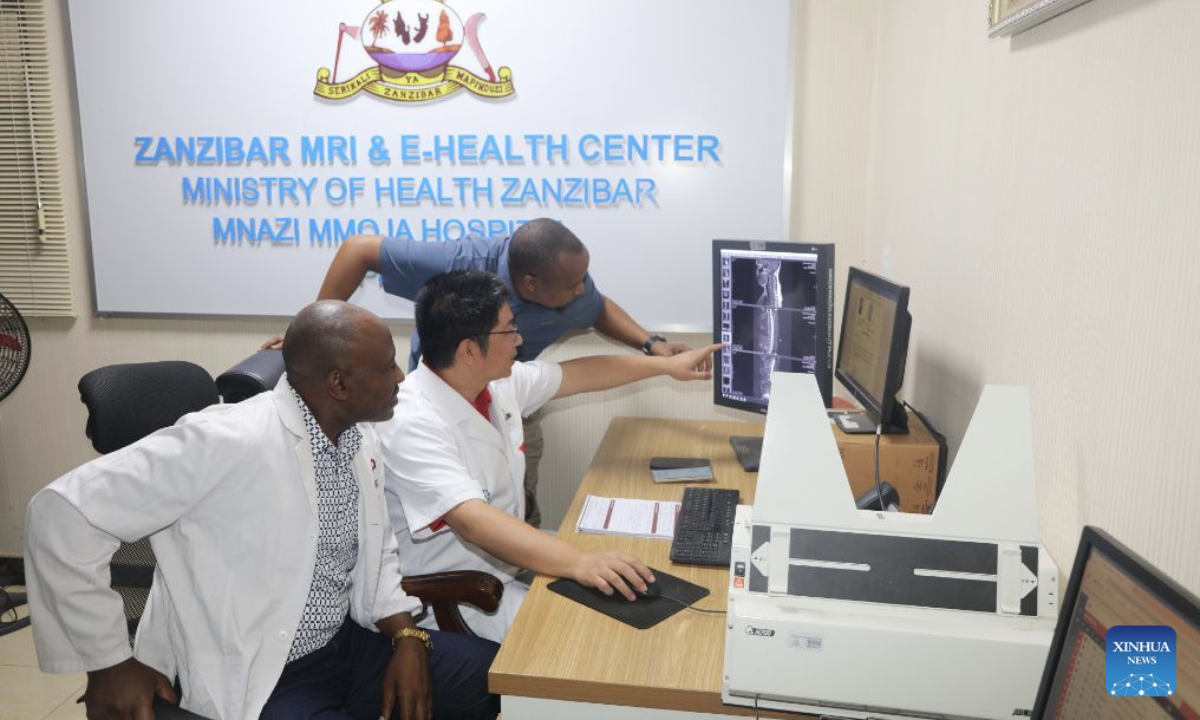
This photo taken on May 28, 2026 shows Yuan Gang, a radiologist with the 35th Chinese medical team in Zanzibar, discussing MRI images with local doctors at Mnazi Mmoja Hospital in Zanzibar, Tanzania. (The 35th Chinese medical team in Zanzibar/Handout via Xinhua)
    This photo taken on May 28, 2026 shows Yuan Gang, a radiologist with the 35th Chinese medical team in Zanzibar, discussing MRI images with local doctors at Mnazi Mmoja Hospital in Zanzibar, Tanzania. (The 35th Chinese medical team in Zanzibar/Handout via Xinhua)In a radiology room at Lumumba Regional Hospital in Tanzania's Zanzibar, a quiet technological shift is reshaping how doctors detect disease, make decisions, and save lives.
On the island, artificial intelligence (AI) systems are helping doctors interpret medical images, while remote consultations connect local physicians with specialists thousands of kilometers away.
Bridging this distance is Yuan Gang, a radiologist with the 35th Chinese medical team in Zanzibar, who combines local imaging, cloud-based AI analysis, and real-time specialist consultations.
For years, Zanzibar's healthcare system has faced challenges in diagnosing complex diseases, particularly because of limited imaging expertise, heavy workloads, and the lack of advanced diagnostic tools, said local physician Haitham Hamudu.
Imaging interpretation, often described as the "eyes" of modern medicine, has been especially constrained by limited expertise, heavy workloads, and a lack of advanced tools, Haitham said.
By linking the hospital's imaging system with the First People's Hospital of Lianyungang in east China's Jiangsu Province, he has introduced a three-layer diagnostic approach, which includes initial reading by local doctors, AI-assisted detection and classification, and quality control through Chinese specialist review.
This hybrid model is enabling doctors in Zanzibar to access the precision and standards of top-tier Chinese hospitals without requiring patients to leave the island.
"Technology is allowing us to overcome distance and resource gaps," Yuan said. "It is not just about solving one case, but about building a system that improves care for many patients."
One of the most striking cases involved a young Zanzibari child suffering from recurrent vomiting and lethargy.
After reviewing the child's Magnetic Resonance Imaging scans, Yuan diagnosed hydrocephalus but found the underlying cause unclear. He immediately initiated a remote consultation with neuroradiology experts in the Chinese city of Lianyungang.
By jointly reviewing the imaging data and clinical records, the team identified the hidden cause, provided a precise diagnosis and treatment recommendations, giving local doctors a clear path forward and the child a renewed chance at recovery.
Beyond individual cases, Yuan has introduced AI-powered imaging tools to improve diagnostic accuracy in Zanzibar.
He said many women have dense breast tissue, making breast cancer harder to detect with conventional mammography. AI-assisted mammography now analyzes images, classifies lesions using the internationally recognized Breast Imaging Reporting and Data System, and helps doctors assess malignancy risk.
In one case, a 42-year-old woman with mild breast pain showed no obvious abnormalities on routine examination. AI, however, detected two hidden nodules and accurately classified their risk, helping doctors avoid unnecessary procedures while ensuring timely follow-up.
Similarly, AI-assisted lung imaging is improving the early detection of pulmonary nodules that are often missed in manual readings.
In one case, a 56-year-old man with a chronic cough was initially diagnosed with inflammation. Yuan's review, supported by AI analysis, identified four small nodules, including one with high-risk features, prompting closer monitoring and potentially preventing the progression of an early tumor.
Beyond diagnosis, Yuan is helping local doctors adopt AI tools, standardized reporting systems, and structured diagnostic methods through hands-on training and case-based teaching, improving diagnostic accuracy while strengthening local capacity.
The AI imaging initiative is part of a broader digital healthcare partnership between China and Tanzania's Zanzibar, Yuan said.
The hospital and its partner institution in Lianyungang have established regular remote multidisciplinary team consultations, bringing together specialists in neurosurgery, oncology, and other disciplines to jointly review complex cases and develop treatment plans.
"I have never seen this kind of consultation before," said local physician Haitham. "So many experts working together, providing practical solutions. It is very inspiring."
Bao Zengtao, leader of the Chinese medical team, said remote consultations not only improve patient care but also enhance the professional capacity of local healthcare workers.
Yuan added that the ultimate goal is to build a sustainable model that can be expanded across Africa, ensuring more patients have access to accurate diagnosis and timely treatment.
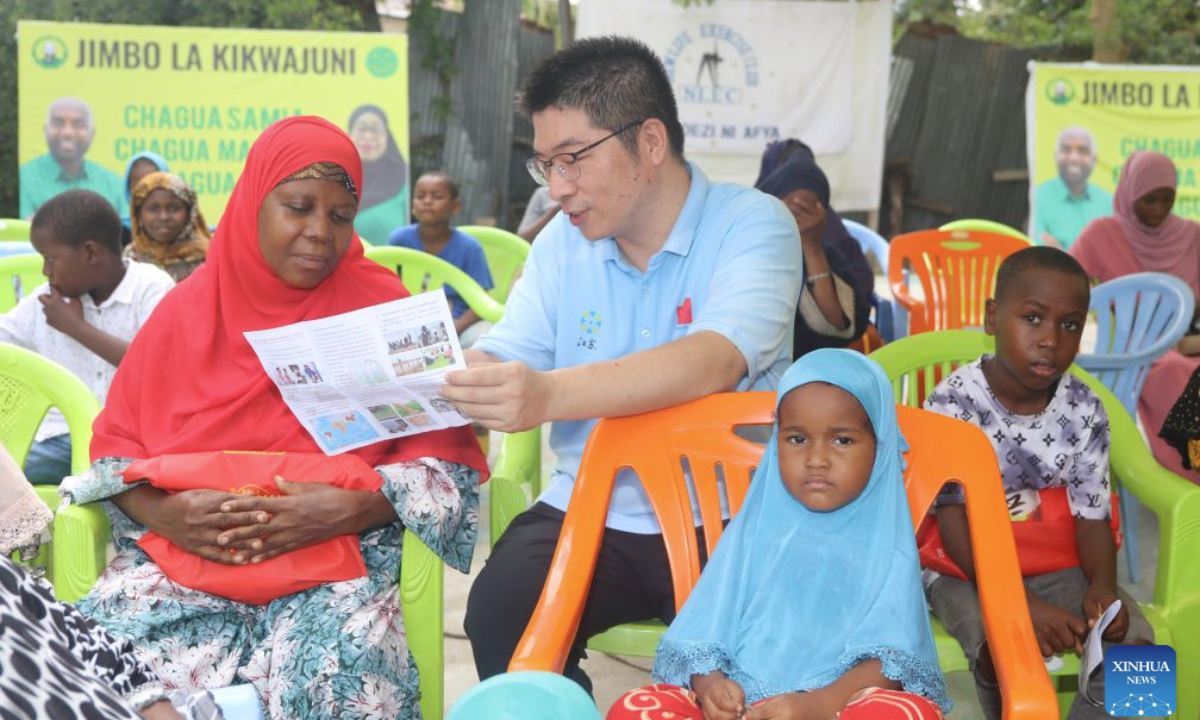
This file photo taken on Oct. 8, 2025 shows Yuan Gang, a radiologist with the 35th Chinese medical team in Zanzibar, talking with a local resident during a community health outreach activity in Zanzibar, Tanzania. (The 35th Chinese medical team in Zanzibar/Handout via Xinhua)
    This file photo taken on Oct. 8, 2025 shows Yuan Gang, a radiologist with the 35th Chinese medical team in Zanzibar, talking with a local resident during a community health outreach activity in Zanzibar, Tanzania. (The 35th Chinese medical team in Zanzibar/Handout via Xinhua)
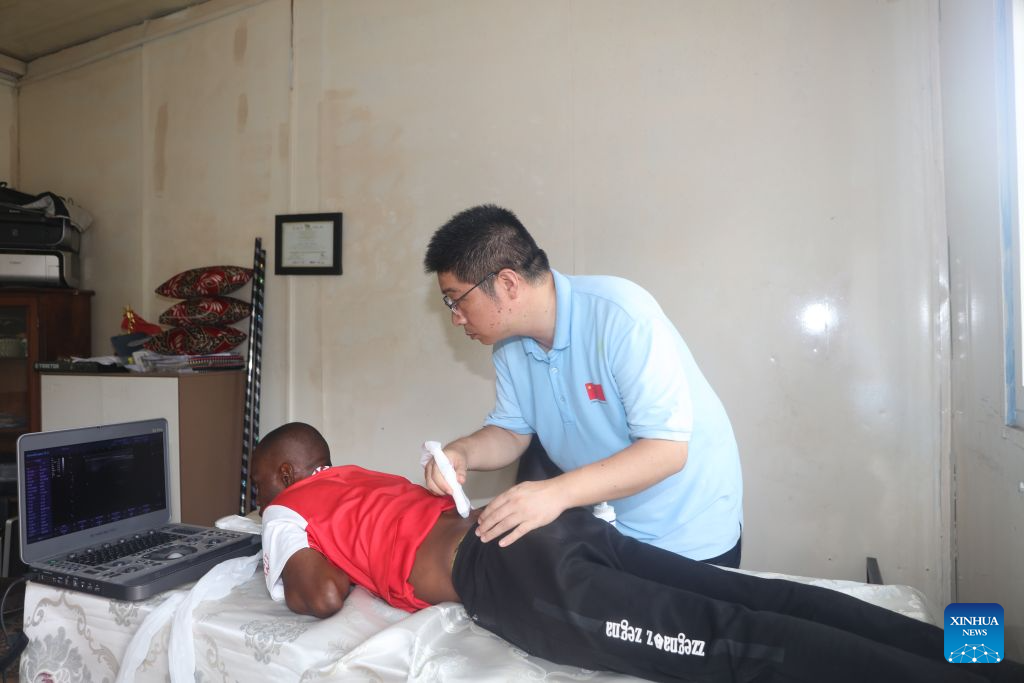
This file photo taken on Oct. 8, 2025 shows Yuan Gang, a radiologist with the 35th Chinese medical team in Zanzibar, performing an ultrasound examination on a patient at a local health facility during a community health outreach activity in Zanzibar, Tanzania. (The 35th Chinese medical team in Zanzibar/Handout via Xinhua)
    This file photo taken on Oct. 8, 2025 shows Yuan Gang, a radiologist with the 35th Chinese medical team in Zanzibar, performing an ultrasound examination on a patient at a local health facility during a community health outreach activity in Zanzibar, Tanzania. (The 35th Chinese medical team in Zanzibar/Handout via Xinhua)

Current article:http://s8w35.sunaichitikouchua.bond/wsq/20260826/289582.html

Published on:04:43:24