
怒火攻心
Why China's favorability is rising across the Global South_我的网站

A |
What explains China's growing appeal?
For many developing countries, China offers a practical development partnership centered on infrastructure, investment, industrialization, technology transfer and trade. Rather than prescribing a single pathway to modernization, it has generally emphasized allowing countries to pursue development in line with their national priorities.
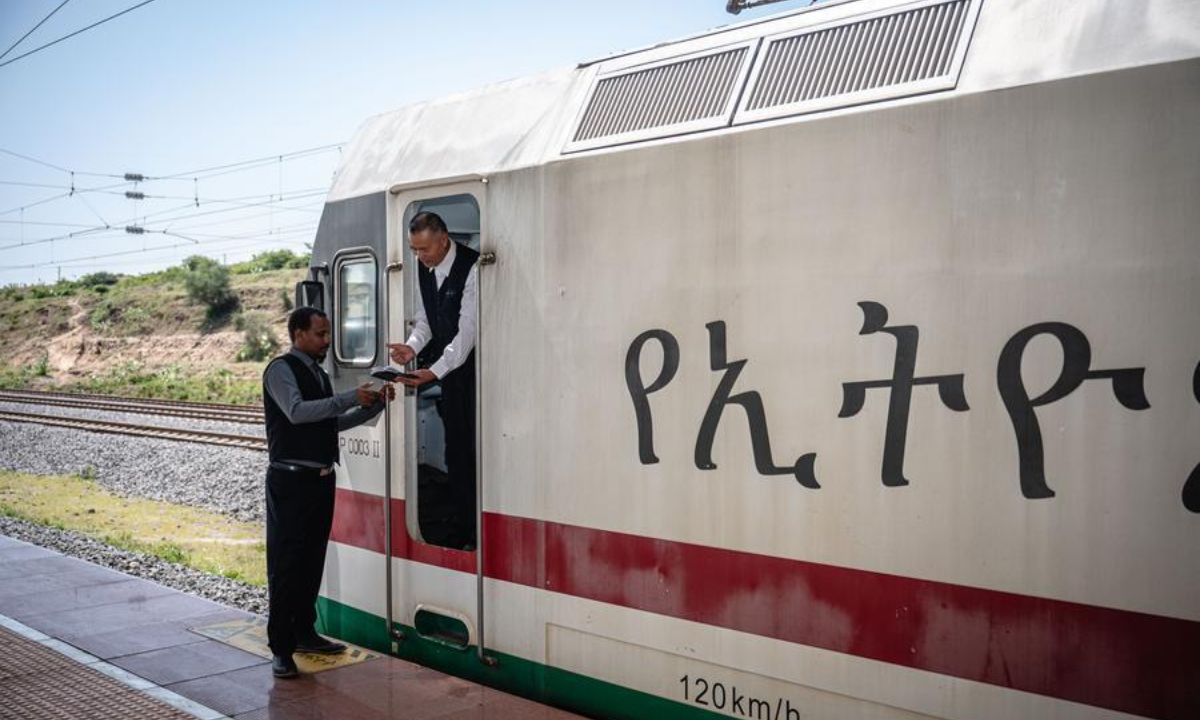
One reason China's influence has grown is that its development model is highly visible. From Ethiopia's railways to Pakistan's power plants, Chinese-financed projects address everyday development challenges by improving transport, energy security and connectivity. Through the Belt and Road Initiative, China has mobilized nearly 1 trillion U.S. dollars in infrastructure investment, producing projects that citizens can see, use and associate with economic progress.
The distinction lies not only in the scale of investment but also in the evolving priorities of development cooperation. While many Western partners have increasingly emphasized economic security, strategic de-risking, private-sector mobilization and governance reform, China has combined large-scale investment in physical infrastructure with technology transfer, industrial cooperation and human capital development.
At the same time, China has actively promoted trade by expanding market access, including granting zero-tariff treatment to many least-developed countries, deepening currency-swap arrangements, and encouraging the use of local currencies in cross-border trade. Together, these measures seek to strengthen economic connectivity, reduce transaction costs and exchange-rate risks, and create new opportunities for developing countries to integrate into regional and global value chains.
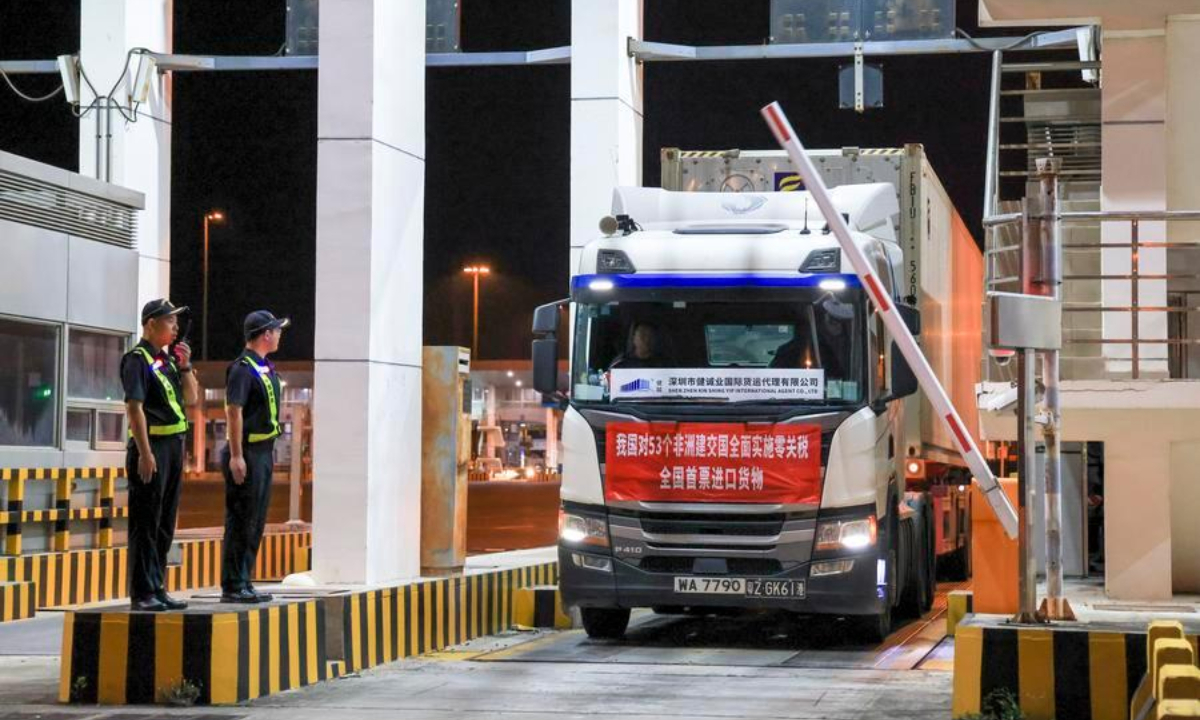
This integrated approach has produced tangible improvements in productivity, connectivity and local capacity, reinforcing perceptions of China as a long-term development partner.
Equally important is the philosophy underpinning China's engagement. Beijing consistently emphasizes sovereignty, mutual respect and non-interference, maintaining that every country should determine its own political and development path. For many governments across the Global South, this approach is a partnership based on equality rather than political conditionality, allowing them greater policy space to pursue domestic development priorities.
Diplomatic style has also influenced perceptions. Through mechanisms such as the Forum on China-Africa Cooperation and regular engagement with Pacific Island countries, China has committed itself to equality and shared development. For many governments in the Global South, that sense of respect and recognition is not merely symbolic -- it contributes to long-term political trust.
Perhaps the most important nuance is this: the Global South is not becoming anti-American; it is becoming strategically pragmatic. Its foreign policy decisions are increasingly guided by national interests, economic opportunity, and development priorities rather than Cold War-style geopolitical alignment.
The Global South's primary ambition is neither ideological nor geopolitical -- it is developmental. Governments want to create jobs, eliminate poverty, modernize infrastructure, strengthen industrial capacity and improve the quality of life for their citizens. China's transformation over the past four decades, from lifting hundreds of millions of people out of poverty to becoming a global leader in infrastructure, manufacturing and technology, has demonstrated what sustained long-term planning can achieve. Consequently, many developing countries are looking to China not as a model to replicate wholesale, but as a development partner from which they can learn, cooperate and pursue shared prosperity while preserving their own policy autonomy.
This contrast is also reflected in broader policy priorities. At a time when many Western governments are increasingly emphasizing tariffs, export controls, technology restrictions, sanctions and economic security, China has continued to promote infrastructure investment, trade, industrial cooperation, technology partnerships, open-source AI initiatives and greater access to its domestic market. Whether one agrees with either approach or not, many developing countries evaluate partnerships primarily through the lens of economic development and tangible outcomes. That difference in emphasis is helping reshape global perceptions.
The world is changing, and the transition toward a more multipolar international order is becoming increasingly evident. The Global South is no longer a passive participant in world affairs. Its countries are exercising greater strategic autonomy, making decisions according to their own national interests, development priorities and the aspirations of their people. In China, developing countries have found a true friend and good partner.
Editor's note: Maya Majueran serves as the director of the Belt and Road Initiative Sri Lanka, an independent and pioneering organization with strong expertise in Belt and Road Initiative advice and support.
。
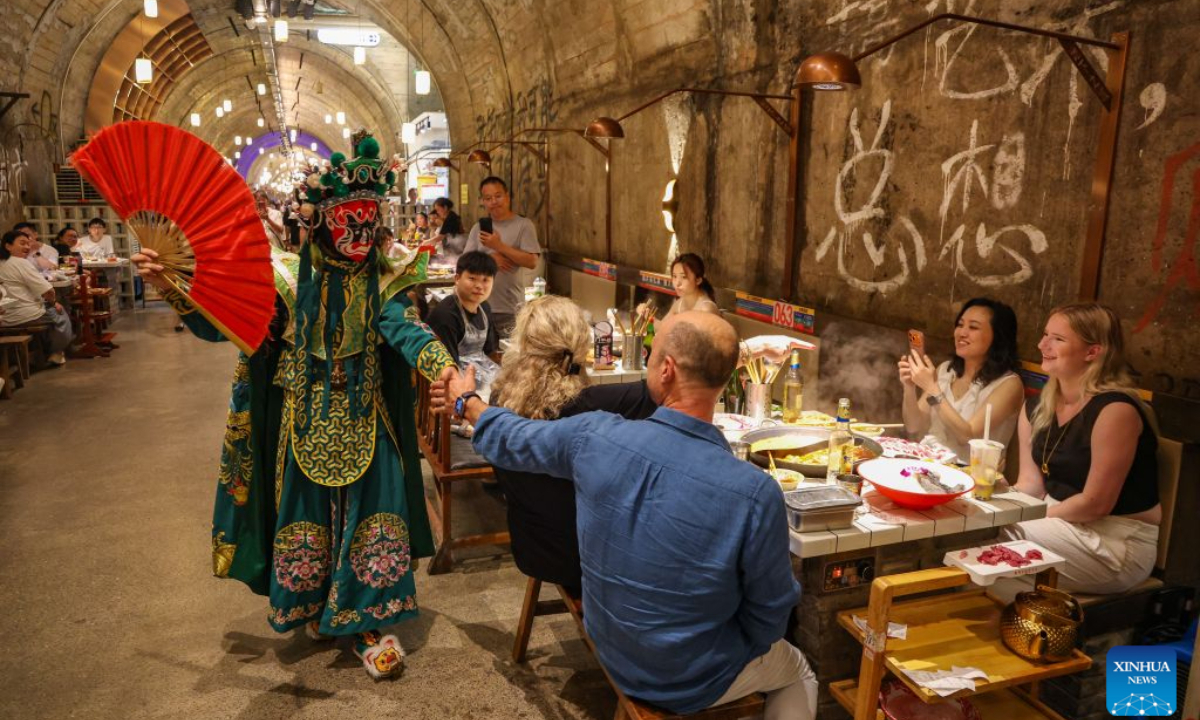
The answer to his comfort lies in the restaurant's unlikely location. This hotpot restaurant, named Underground City, is hidden inside a former air-raid shelter, one of the city's distinctive spaces offering natural coolness.
"It's amazing that the restaurant stays so cool even in scorching summer heat," Rostand said. "Chongqing has given me the chance to experience something I can't find in Australia."
Chongqing has long been dubbed one of China's "furnace cities" for its sweltering, humid summers. In July alone, the city endured 26 consecutive days of high heat, with temperatures breaching 40 degrees Celsius for a full week and topping out at a scorching 41.6 degrees.
The blazing heat, however, has failed to dampen the enthusiasm of global travelers. According to the Chongqing General Station of Exit and Entry Frontier Inspection, more than 610,000 inbound and outbound trips by foreign nationals were recorded at Chongqing Jiangbei International Airport in the first half of the year, marking an 86-percent surge year on year. The top five source countries were Thailand, Malaysia, Singapore, Vietnam and Indonesia.
European travelers proved to be a standout growth driver. Data from Trip.com shows that as of July 21, inbound travel bookings from Europe to Chongqing for this summer season climbed by over 40 percent year on year, while scenic spot ticket orders surged by 214.7 percent and activity-based bookings rocketed by a staggering 6,900 percent.
Thanks to China's visa-free policies and other travel facilitation measures, Chongqing is rapidly gaining traction as a go-to "coolcation" hotspot for international visitors. Creative cool-off spaces, diverse travel experiences and comprehensive summer services have all contributed to its rising appeal.
UNDERGROUND COOL
Chongqing's summer cooling secrets were first found underground. Since the late 1930s, the city has carved thousands of air-raid shelters into its mountainous terrain.
Once serving as sanctuaries for civilians during the Chinese People's War of Resistance against Japanese Aggression, these spaces have now been repurposed as hotpot restaurants, tea houses and venues for Sichuan Opera performances, providing both refreshing coolness and preserving the city's living memories.
"The temperature inside the shelters remains around 25 degrees Celsius all year round, making them natural cool retreats," explained Wang Jing, marketing director of Underground City.
"We serve more than 300 tables a day on weekends," she added. "Right now, about one in every six diners is from overseas. And we're seeing more and more visitors from Southeast Asia and Europe."
Annika, a tourist from Germany, revealed that the restaurant has gone viral on overseas social media platforms. "We were attracted not only by this unique way of escaping the summer heat, but also by the opportunity to dine in a place filled with history and culture," she said.
CHASING CHILL
On August 1, Chongqing issued an orange heat alert. At a water park in its Fuling District, 10 tonnes of industrial ice were dumped directly into the wave pool. Half-submerged in the refreshing water, visitors could splash around or even play mahjong at custom-made tables in the pool.
This unique summer cooling scene has attracted coverage from mainstream media in countries including Russia and Canada, with overseas outlets reportedly dubbing it the most intriguing summer spectacle in China this year.
At Chongqing Xingrui international travel service, inquiries from cross-border travelers hailing from hot and humid regions such as Vietnam, Laos and Indonesia have risen notably in recent weeks.
Peng Hengcong, head of the travel agency, said they have rolled out themed tour products, including "cool retreats in the mountains" and "gorge rapids adventures," tailored to overseas visitors seeking summer cooling experiences. These products cover areas with higher altitudes or rich water systems in Chongqing, with the highlight being a "23°C summer" experience.
Luo Zibai, an expert with the China Tourism Academy, believes that Chongqing's sustained popularity among travelers lies in its ability to fully leverage its distinctive strengths and develop differentiated tourism products that offer a broad spectrum of experiences.
URBAN REFUGE
Chongqing is weaving a citywide "cooling network" -- ranging from shopping malls to public facilities, and from indoor spaces to outdoor areas.
At a shopping mall called The Ring in the city, visitors are greeted not by endless rows of shops, but by a lush indoor rainforest. With misting systems and carefully designed lighting, the mall keeps the temperature at about 21 degrees Celsius, creating a cool, dreamy summer escape.
"I like Chongqing a lot because it has its own character," said Bilal Badri, who was visiting from the Netherlands. "The way nature and the city's landscape blend together here is just perfect."
The cool experience extends beyond the mall. In the Mountain City Alley historic district, a 400-meter-long pedestrian walkway has been transformed into a "cooling corridor," where misting systems and shaded areas reduce the perceived temperature by 3 to 5 degrees Celsius.
In addition, since July 8, Chongqing's rail transit system has set up cooling zones in 158 metro stations, offering free air-conditioned spaces and heat-relief supplies to residents and tourists alike.
"Chongqing's creative and thoughtful ways to help people beat the summer heat are impressive. It's really interesting to discover these unique experiences," said Alexandra, a Romanian tourist. "This time I didn't stay long enough to explore more of the city, and I'm planning to come back in the near future."
。

B |
Current article:http://s8w35.sunaichitikouchua.bond/rmu/dqkry.html
Published on:04:55:03


1
记者:胃部不适+昨晚睡眠质量欠佳,小蜘蛛今天缺席马竞的训练2
行业首款阔直板手机!华为Pura X View官宣9月7日正式发布3
上半年亏损或四千万,爱丽家居凭什么13天12板?,上半年亏损或四千万,爱丽家居凭什么13天12板?4
2030年我国将基本建成现代农产品产地市场体系5
盖茨:人工智能将带来历史上最动荡的时期6
अंबाला में कर्मभूमि एक्सप्रेस में बच्चों की तस्करी का प्रयास नाकाम, 10 मासूम छुड़ाए7
男单爆冷频出!强敌集体翻车,国乒小将机会来了?8
被美国疯狂攻击的国家授时中心,到底是个啥?9
梅祖的新音响配件今天发布:官方称为“振翔”10
10胜1负!国羽世锦赛第3日全线大捷11
蒋万安是否帮民众党站台引蓝营热议 名嘴:若主动帮忙百利无一害12
陷入昏迷的英国摩托车手雷亚情况好转13
中美谈判靴子落地,如何影响各行业板块?14
消息称苹果 2026 款 Mac Mini 配 M5 Pro/M6 芯片15
宇树科技背后的国资投资账本
- 随机推荐
1
三伏过后,高温还会持续多久2
A股收评:超4200只个股飘红,沪指收涨,深指、创业板指收跌,A股收评:超4200只个股飘红,沪指收涨,深指、创业板指收跌3
好响的雷,好突然的大雨!杭州11个预警持续生效中,小心短时大到暴雨和雷雨大风4
万物云2026年中期业绩:营收191.1亿元 同比增长5.4%5
21岁女子凌晨送外卖被导航导进未开发的深山,上山路上还被狗追,心想“这单再不送成功岂不是亏大了”,警方用近两个小时将其救下山6
रूसी तेल नहीं ये है असली वजह... ट्रंप ने भारत पर क्यों लगाया 50% टैरिफ? US की दिग्गज कंपनी ने किया खुलासा7
Former Afghan interpreter says Taliban tortured him for weeks but U.S. still won't give him a visa8
Third China-US Track 1.5 Dialogue held in Beijing as attendees discuss constructive strategic stability, practical cooperation9
小天才回应“167cm 女孩 101 斤被判定偏重”:表述不严谨,已连夜整改10
大乐透第26092期开4注一等奖11
'What The F*** Are You Doing?': Erik ten Hag's X-Rated Rant at Man Utd Players Goes Viral12
8月26日龙虎榜复盘:立新能源净买额居首13
河北全链条发力筑牢残疾预防屏障14
【东兴一幼 | 第796期 | 园所活动】携手相辅助 扬帆共成长——合肥市东兴第一幼儿园开展园际交流活动15
《劲舞团》2026城市巡回赛天津站—青春返场,热舞收官!